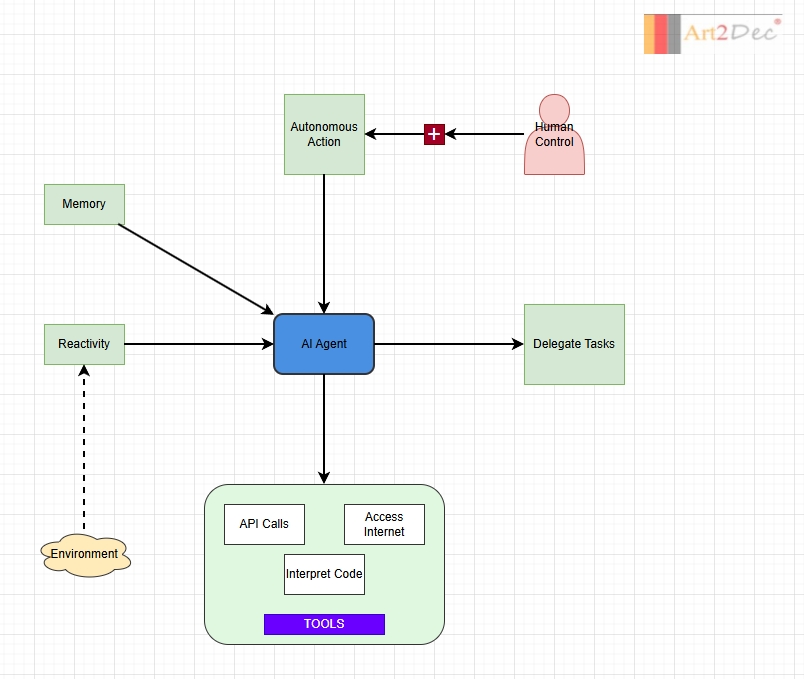

Traditional software follows a predetermined path. However, AI agents can navigate uncertain situations and figure out what needs to be done.
AI Agents can perceive, decide, and adapt to achieve goals. This represents a significant leap from static programs to dynamic collaborations.
At its core, an AI agent works in a continuous cycle during which it perceives the current situation, thinks about what to do next, acts by taking a specific step, observes the results of the action, and then repeats the process. This cycle continues until the agent determines it has completed the task or needs human input to proceed further.
Multiple types of AI Agents exist, each supporting different capabilities:
1 – Simple Reflect Agents react to patterns, like thermostats or basic chatbots.
2 – Model-Based Agents build internal maps of their environment, enabling context-aware behavior.
3 – Goal-Based Agents can plan ahead and choose actions that serve specific objectives.
4 – Utility-Based Agents weigh trade-offs to find the best possible outcome.
5 – Learning Agents improve continuously by learning from feedback and experience.
AI agents are ushering in an era where software systems can become active collaborators.